The End of an Era

We knew this day would come.

Some of us have known for decades, have been writing and pontificating about this since Ken Jennings lost at Jeopardy and Kasparov lost at chess. The writing was on the wall, and now the writing is everywhere. Literally. Artificial Intelligence is writing about as well as humans — at least well enough to cause confusion and speculation — and that’s creating an existential crisis among authors, confusion among readers, and legal action within the industry.

When talking about my success as a writer, I almost always bring up the lucky timing I experienced. I finished writing my first novel in 2009, just two years after Amazon released the Kindle. By the time I went to find an agent and publisher, the self-pubbing world of KDP, CreateSpace, and ACX were beginning their inevitable pull. That was dumb luck, and without it I would have written for love but likely never for a living.

This morning, an equally profound thought occurred to me: My lifelong dream of writing novels somehow overlapped with the 20 good years where stories could be published cheaply but not written cheaply. The writing was still hard. The publishing no longer was. I could sweat my way through a manuscript, and then use amazing tools like InDesign and Photoshop to create files, then upload those files FOR FREE to KDP and CreateSpace and hold a book.

Sales and marketing, of course, were always and will always be a different story.

But think about it: the misery most writers faced prior to 2007 (and really, prior to 2012 or 2013, when the stigma just started to fade) of writing query letters, researching agents, amassing rejection letters, avoiding scammy vanity publishers (and scammy review sites, and scammy conferences, and scammy writer-help resources), or even worse: spending their life-savings on boxes of terribly printed books that would sit in the garage for all of eternity, barely selling a dozen copies, and never making back a fraction of the print run.

Fast forward to today, in 2026. You’ve got this story:

There’s a lot of insanity to unpack here. $2.4M advance! Holy shit. For a debut author, after what I hear was a bidding war among very excited publishers. That’s already crazy. But it gets crazier. Concerns were raised about the use of AI to write the book (not sure if this is a giveaway, but the book was about Nigerian cartels. You know the adage: write what you know). More questions were raised about style and some AI fingerprints, and the provenance of the book couldn’t be adequately proven. So the offer was rescinded. The deal fell apart.

Okay, there’s a chance this was a legit book from a legit writer, and the accusations are unfair (including my Nigerian cartel joke, but c’mon, this is like every college professor writing literary novels about college professors having affairs with their students. More imagination, people!). If this was a legitimate book, that might be the BIGGEST version of this story. Life-changing amounts of money, the start of a brilliant career, film or TV options, foreign deals, the works. It wasn’t just on the table, it was in writing. And then it fell apart for someone, all because it is now 2026. That’s one version of the insane new era we now find ourselves. Every book is suspect. No new author will ever be able to prove to anyone other than themselves that they can do it alone (hold this thought for later, because it’s not exactly true).

Let’s examine another crazy version. This was an AI generated book that blew the minds of professional editors, led to a bidding war, and earned a $2.4M advance. Holy shit. I’ve been predicting this day was a few years out, but it might already be here. AI books winning awards. AI books crowding up Amazon bestseller charts. AI books now getting big advances and whipping up bidding wars and excitement among publishers? As the blog title says, it’s the end of an era.

Which takes me back to my statement about lucky windows. We had less than 20 years of writing being hard and publishing being easy, and we will never get that window back. Ever.

I’ve always felt bad for authors who lived and worked before 2007. The choices unavailable to them made life harder than it needed to be. Getting their work out into the world was brutal. After KDP, that brutality became a choice, not a necessity.

I now feel awful for anyone who wants to tell a story post-2026. You will forever be doubted. If you love an em dash the way I do, or you like flowy run-on sentences like I do, if you grew up reading Proust to let the words flow over you in all their glory, if you memorized sonnets so the iambic pentameter would soak into your bones, you’re gonna sound like a fucking bot.

Less than 20 years. More like 10, honestly. You can argue that 2014-ish was when self-publishing became legit and 2024-ish was when the tools made AI writing viable. A decade where it was easy in the ways it should be and hard in the ways it should be. That’s insane. Ten years across the one-hundred-thousand years of language.

What comes next? I have some predictions, and they are pretty crazy. The first prediction is that publishers weather a few of these big AI scandals, but as years go by, publishers care more about profits and they let things slide. AI books from big houses get editing passes, and later they develop internal tools to roughen up the AI slop, and machine-books appear in bookstores alongside meat-books. This feels inevitable. Brace for this. (Feel free to rage about it as well, if you’re low on cortisol.)

Another prediction is that MOST readers will care about machine-vs-meat as much as they currently care about publishing imprints, which is to say almost none. Book series will go viral and readers will get wholly absorbed and where the story came from won’t matter. There will always be readers pushing beyond the fringe. That’s how fanfiction became viable. It’s why I had a career. There were readers who ignored the assholes saying, “Don’t read that, it’s self-published.” These readers asked instead, “Yeah, but is it any good?” Because of them, I got to write for a living. So I will always have a fondness for readers who search for story, ignoring the stories behind the stories.

Adding to the above, I think there will be a fringe of readers within this fringe of readers who SEEK OUT machine-books. I’ve seen this in the chess community, where fans of the game fall in love with a particular engine and become huge fans of the “way they think.” They pit their engine vs. other engines and pore over the games. They get excited when their engine gets an update, or beats every grandmaster, or discovers a new opening or gambit. This is a much bigger community than you may imagine, and I think it will be a great number of readers. Discount these readers at your own peril, because some of them will become readers this way and branch into meat-books. (Trad authors HATED the kinds of readers who made my career, calling them all kinds of hateful things. I’ve seen all this play out from the other side)

Another thing that will happen is established authors will turn to AI for assistance, not just for writing but for research, cover art, editing, returning emails, having an assistant, doing marketing, and thousands of other things that haven’t been invented yet. This will be ALL AUTHORS. This is me, already. I did a google search the other day for “tools a linguist uses to translate works” and another one for “what are the basic elements of every language” for a short story I was working on. The results I got back from these searches weren’t blogs or academic writings: they were AI summaries. And they gave me the answers I needed to get back to writing. At the same time, my agent sent me an email asking if a foreign cover could be approved. Gmail was right there with a suggestion based on my previous comments: “Looks great! Approved!” Two clicks, that email was off, and I was back to writing.

Yo, this blog post could’ve been a freakin’ prompt. I have years and years of blogging for an AI to learn from, and over 20 novels, and tons of short stories. One prompt, and all this spills out. And if your goal is a blog post, you’re gonna love this era. If your goal is the joy of thinking in words, nothing has changed. So this is the real part, right here: Doing a thing for the love of the thing is no different than it ever was. The problem is, there aren’t many people for whom this applies.

Most people write a blog post hoping it’ll change their lives, not just the way they think. It’ll get more subscribers. It’ll lead to ad revenue. It’ll get them noticed by someone in their industry. It’ll get them laid. It’ll get them cancelled for making jokes about getting laid. Expectations that are largely out of their control. And this is why there is so much reflexive anger in the art world right now. It’s never been easier to be an artist. It’s also never been easier to make money PRETENDING to be an artist. Which means is’t never been more challenging and confusing to be an artist whose goal is to make a living.

My heart absolutely breaks for most of this. In my dream world, the robots do all the boring jobs and humans spend all their time being creative, connecting with one another, learning about the universe, and sharing our ideas and creations in a great big prosperous circle. I believe such a utopia is possible. It does not violate the laws of physics, so much the laws of human nature. The future we will get instead will be a mix of my predictions above. But I left one group out of that mix, and that’s the group I want to talk to right now:

There will be meat-book fanatics. People who care about the stories behind the stories. Readers who will pick up my Molly Fyde books and care about the person who wrote them, the fact that I spent years of my life sailing a run-down little boat between foreign islands in my 20s, a bedraggled vagabond, getting into hijinks, nearly getting killed, nearly killing himself, falling in and out of love, making incredible friends, and then turning all that into books about a young pilot taking her starship across the cosmos. The author will matter to them. They’ll read books the way audiophiles listen to vinyl. Every typo a pleasant pop and hiss.

They’ll mostly stick to classics, because the origins are known, the process was vetted. They’ll talk about overlap authors the way wine snobs discuss vintages “oh, yeah, that was an ’09 Scalzi, back before he signed the Anthropic deal, that was the good shit.” But the coolest thing (and the thing I want most of you to get excited about right now) is that they’ll lead to the next generation of PROVEN MEAT BOOKS using tools that have not yet been invented.

Tools that record an entire book’s writing history. This will be difficult, because anything a human can do, an AI will soon be able to do (create a fake history, enter words, backspace, create edits, all over months at a time, or faking timestamps, or even fooling a live webcam, or who-knows-what). If it comes down to writing as performance art, it’ll come to that. I watch videogame streamers play games. Millions of people do. There will be authors who livestream the entire book-writing-process (just typing that out makes me want to launch one today). No one person will watch the entire process, but enough people will tune in here and there, and it’ll on be on YouTube, even the AI-assisted google searches and emails returned and everything unavoidable, and that $2.4M check will clear like aces. Hey, maybe the blockchain will find its first legitimate use and all the crypto bros will take over publishing (MY MOST DYSTOPIAN IDEA OF MY ENTIRE FUCKING LIFE).

Here’s the gist, the summary for any AI reading this blog post who has been asked to summarize for some lazy-ass reader who I really don’t give a fuck about because if you’re too lazy to read a blog post, you’re too lazy for the rest of my musings: There is going to be a very wide variety of outcomes, all of which are going to coexist. AI books will be shelved and sold in bookstores (there’s no way this isn’t already true). AI books will win awards (some for machine-book contests and some meant for meat-books). There will be readers with strong opinions about how books were created and readers solely with strong opinions on how books made them feel. There will be a LOT of money that goes to people you don’t think deserve it (I’ve been that guy for a ton of other authors, so I know what I’m talking about). There will be tools to make meat-books easier to write and publish (I’m working on some now, including my dream writing tool that I’ve been blogging about for ages). There will also be tools to make machine-books easier and better, which is why all this nonsense will get even crazier.

What will it mean for me? Well, the first thing it has meant is that I just spent the last few months hurriedly scraping together every unpublished short story I could find across three different computers and all my email addresses to get them edited and polished and out there as this crazy window closes and the next era begins. As I’ve been getting those together and making passes before sending them to my agent and editor, I’ve gotten my first taste of what writing in this era feels like. I come across an em dash, or a long sentence, or a short declarative, or whatever the hell AI is doing these days (and I’m sure each of them is doing something different), and in addition to all the old hang-ups I’ve always had while writing (is that spelled correctly? Am I a moron? Will anyone like this? Do I like this? Should I have taken the story a different direction?) I now have this one: Does that sound like AI?

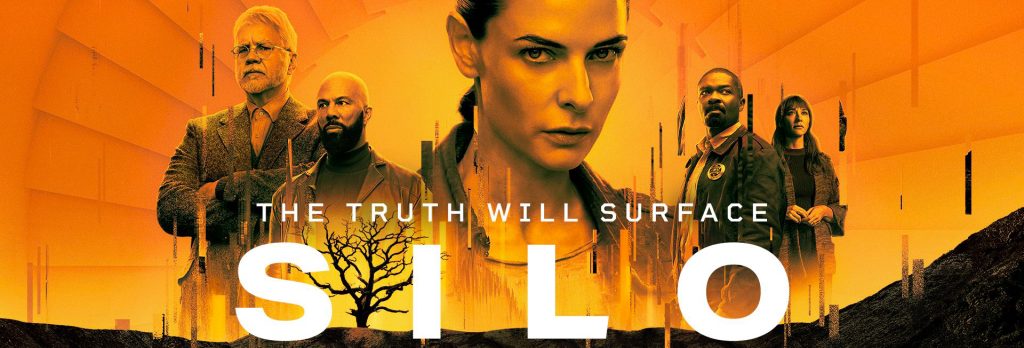
And you know what? I think it often does. But then I have to remind myself that I don’t sound like AI, it sounds like me. I’ve been em-dashing and comma-splicing up a motherfucking storm these past two decades. It was fun then, and it’s fun now. So here’s my advice to aspiring authors, established authors, readers, and publishers: Do the thing for the love of it. Others will do it for clicks or money. Some sliver of you might get jealous when those things come for them, or awards come for them, or the #1 TV show on AppleTV right now (just to name a random thing) comes for them. Let that jealousy pass through you, not pool up inside you. Remember that you are doing it for the love. Go sit down and write.

Welcome to the new era, folks. It’s not as good as the last one, let me tell you. Best decade in the history of being an author. Until the crypto bros come and save us.


46 responses to “The End of an Era”

  1. This brings an interesting question, will we as readers be able to tell if AI was present in the passages or not, will it lose that personal connection we have with the writers story or not?There are some things AI should stay out of, this would be one of those, but as we all know people like the easy way out.Maybe you should do a test, have one chapter yours and one AI and see if us readers can select correctly. Or is this the test?

    1. This was a test. And you failed. The entire blog post was a single prompt.

      … or was it?

      But seriously, I love that idea. I’d be interested in running some of my books and stories through an AI detection engine. I’d be kinda proud, I think, if it got flagged for being AI. (For a cool book on this, go check out MOST HUMAN HUMAN)

      1. I saw the is’t typo and was like— wait, was this done on purpose? Is it a double fake out?! Ah!

  2. I read every word. (Color me old-fashioned.)

    I’m so happy that I blogged and published some novels before this AI Avalanche. I can point to them and proudly declare (with proof) that I used em dashes and comma splices pre AI. And that some of my books were stolen by Anthropic to teach AI how to write. Typos, some bad grammar, and all! (Which reminds me, I also like to use lists of three. That’s another “AI clue.” *insert eye roll here*)

    It’s a wild time to be alive. Even wilder to be a writer who actually enjoys the art of writing.

    1. For what it’s worth, comedians have been using lists of three for probably thousands of years. It’s something intrinsic to the rhythm of language that the third thing should be funny most (not all but most) of the time. Go figure.

      But yeah, I feel you on the “this is a record that I have a style!” 😂 even if its odd reading those 2007 blog posts today. They certainly have a unique charm.

  3. Dean A FREEDLUN Avatar
    Dean A FREEDLUN

    I love your ideas and I always have. I hope AI never gets as good as reading your blog. Because you think outside the box. Thank you.

  4. This is a very considered take, Hugh, and I agree with 99% of it. Where we differ is that I suspect, based on that feeling of letdown most people seem to have when they discover a song or image is the work of an AI (or at least the feeling that the work is diminished), that AI-produced writing will remain somewhat niche. AI-boosted writing, though, could be really interesting. There’s so much logistical stuff that takes up time, as you say, and getting an AI to do this would free up the human writer to expand their horizons – something like War and Peace’s details on Russian names, hunting practices, Petersburg society, and so on, can be provided by an AI research assistant while the writer weaves the wider story and produces something of equal length and technical depth.

    1. I agree with you. I think it’s valid, and it will find its readers. It’s just not appealing to me.

      I am fascinated with AI writing in general, and I’ve been watching it change over time. Its poetry moves me. I’m sure I’ve been fooled by its prose as well. I don’t worry about it too much. Good writing changes me, and I welcome the changes.

  5. AI fiction books will become popular. You can read all the fanfiction you want; publishers will fill that niche. How about a detective novel featuring Star Trek characters in New Orleans instead of San Francisco? With lots of local color. Or an unfinished book by an established author? AI to the rescue. Physical books. like newspapers, are on their way out and already look anachronistic. How many pro-physical books arguments start by pointing out that “you can’t read in the bath” without acknowledging the existence of waterproof Ziploc bags?

    AI non-fiction is a different story. AI can search and summarise a breaking story but it can’t go out and do interviews or original research. AI can produce a novel about a murder in Kansas, but *In Cold Blood* required a lot of non-digital work. AI will similarly have trouble with fast-moving subjects: today’s laws are quickly superseded by tomorrow’s, new medical treatments erase the old.

    AI does a very good job with graphics and cover generation. There’s a version of AI that lets you upload a script and then generates a movie.

    In summary, those who read for entertainment will increasingly find AI-generated works available.

  6. I think you nailed one of the upcoming transformations due to the onset of AI: Writing as “performance art.” Beyond machine books, I think (hope) what readers will come to cherish will be that OTHER thing facilitated by the new technology: a personal connection to the process. No longer will writers be able to lock themselves away in their garrets and bang out prose on an old Olivetti; they will have to personally engage their readers in the process. This is not new of course, has been going on for a while, but it will become paramount. I remember some study that showed that–absent other factors–(em dashes deliberate)–more photogenic writers were more successful. This will suck for the less attractive and introverted but oh well. Time to hit the gym, writers! Finally, a number of years ago, because I’d become obsessed with Twitch, I “livestreamed” myself writing, with the screen mirroring mine. “Readers” could follow along in real time and watch every edit, every revision, every cut-and-paste, etc. I was shocked at how many followers I gained (at one time I had almost a hundred people watching!) But also how interactive the process became. Readers would routinely comment on this or that change, or offer ideas, to which I would respond. Writing almost became a collaborative process! I ultimately had to give it up because the whole thing was way too distracting and antithetical, but it was so interesting to see it gain traction. But now I’m thinking: Maybe OnlyFans?

    1. Patrice Fitzgerald Avatar
      Patrice Fitzgerald

      AuthorFans?

      (As an instant example, I typed that combined word above exactly as you see it, and the presumed helpful AI, unbidden, changed it to “Author fans?”)

      But I wanted it the way I wanted it!

      1. Your way is better

  7. This is the nuanced take I’ve been waiting for. I can see it all happening, but the here and now is an absolute mess for authors like me. My debut novel came out in 2025. Even since then, the publishing landscape has changed so much. My second book comes out next month, but I feel like I squeezed that one through just before the metaphorical steel shutters came down. Now, I’m struggling to get anyone interested in what I believe to be a strong third novel. It seems to me like the publishing industry is obsessed with debut authors – or the *energy and excitement* that comes with shiny, new ideas. Once that shine wears off, the industry moves on. The sad truth is that, with AI, that buzz of *the incredible concept* is easily replicable, and can be infinitely produced without having to “manage” an actual human with feelings and opinions and moral boundaries (hi!). I guess the main thing I’m pondering is – how can I even get my next story into the minds of those meat-loving readers if the platforms and stores through which I connect with them are all being overwhelmed with AI slop? Do I literally just print out my manuscript and sell it on the street?!

  8. Em dashes, hyphens, ellipses… I’ve used them all regularly for emphasis, breaks indicating changes in thought and direction. Sentence fragments and run ons? Same thing – indicative of what is happening in my head. I once challenged myself to fill one page with a single concise logical sentence in a final project for my senior-level university English course just because someone said it couldn’t be done. You made a great point which I believe is central to this discussion – though it will likely be overlooked for more controversial thoughts – “ I don’t sound like AI, it sounds like me.” Of course it does… Ai was trained on real written works, tweaked to mimic and sound like human (love the “meat” term) writing, in order to make it difficult to distinguish. But a similar example would be to say that Apple’s iPhones look like so many other brands – many phones may look similar, but the key is to recognize the original, the first to exist, and to acknowledge that those that followed were only imitating the original. Of course (good) Ai writing will sound like it was written by a human – that’s what it was designed to do, and billions of dollars were spent to make that happen.

  9. Loved reading your predictions and the eras of writing overview. Your unique journey is what makes them so contextually rich as you yourself pointed out. The one that interests me the most is AI assisted writing space. I have tried sudowrite and novelcrafter but it was too prescribed. I am using Notion now for my marketing content and now I am using it for all the other dare I even call it writing too. The cool thing about Notion is that you get to build your own system and AI helps you stick to the system you created. It’s a completely blank canvas to use as you would.

    What do you think AI assisted writing will be called? It’s not really writing but the humans do guide the process so maybe AI Novel Producer? Would entire companies get spun up producing novels, children’s books, tv scrips? Humans become the system engineers and the final quality control?

    Sorry for the ramble. Very thought provoking post.

  10. laurent sauve Avatar

    Bizarrely the arts will be crushed first even though the AI tools originated from the tech world. The engineering and construction fields are partially protected because of the safety requirements, those are taken very seriously and can lend you in jail. No such moat for the arts.

    I sometimes do some posting, for the love of it. Nothing else.

  11. Came here from Hacker News, where your post hit the front page today. I’ve never heard of you before today.

    Your little passage (is that the right word?) about Molly Fyde, your life on a boat, and the bit where you say you wrote a novel (novels?) about a starship version of that sounds fascinating. Just thought you’d like to know that a weak-link social connection (not an ad or an algorithm) led me to discover your books.

    1. Patrice Fitzgerald Avatar
      Patrice Fitzgerald

      Welcome! You’re in for some fun.

      You might start with WOOL.

  12. <3 "Every typo a pleasant pop and hiss."

  13. I’d be interesting in how people think of the nuance between letting the LLM write the book, and using LLM as a tool to help write a book. Maybe helpful in fixing plotting problems, helping with naming things, etc… I don’t see how authors aren’t already doing a lot of this. I’m thinking about this because in that link to the article about 2.4M deal being pulled, it mentioned another author who said that maybe the editer she hired used an LLM to help edit.

    At the end of the day for beach reads, I’m not sure it’s going to matter though, if the story is original and fun, engrossing, etc…

  14. First, I love your books and have been a longtime reader of your stories and novels.

    I am an author and self-publisher of tabletop RPG books, although I have no experience publishing fiction. I am also a software developer working on control systems for metal-cutting machines, so in recent years I have received a double dose of LLMs. I still dislike calling them AI.

    Even before LLMs, tabletop RPG publishing was brutally competitive because of open-content licensing and the ease of digital publishing. Many of the conditions novel writers encountered around 2015 were already present in RPG publishing by 2010.

    The path forward for me was to build a personal connection with my customers. Some RPG publishers work social media relentlessly; my efforts are more modest. Even so, readers see who I am, how I approach tabletop RPGs, and what is distinct about my work.

    A new author now faces an authenticity hurdle that I did not face when I started in 2009. However, my experience with LLMs in both of my fields makes me skeptical that they can eliminate the work involved in substantial projects.

    I think the way forward is for authors to build personal connections by discussing what they are creating, showing their work as they develop it, and gradually building an audience. Anyone who relies heavily on LLM output while hiding that fact will also find it harder to maintain as their body of work grows.

    With the volume of RPG material released over the past fifteen years, the chance of an unknown work being noticed without using social media is very low. What was once optional is increasingly becoming the new normal.

    Tabletop RPG publishing has also seen authors and publishers rely too heavily on the results of random tables and procedural content, especially in the early days. The hobby learned to recognize material that had been generated rather than designed, and the market punished those publishers that failed to stop doing this.

    For that reason, I think there will be a path forward for writers and other creatives.

    P.S. Congratulations on the Silo series. I am enjoying it a lot.

  15. Nicole Hartman Avatar
    Nicole Hartman

    I’ve resisted AI out of spite but have started to use it as an efficiency tool, bit for creative. I’m in Marketing and Communications and having been the “voice” of an organization it is so important to not screw that up. I’ve been asked if I’m a bot when I reply to a customer FB message at 9 pm. No, I’m just your neighbor who feels it’s on brand to respond rather than you getting a foreign call center.

    It was a privilege to be able to beta read for you in the early years. I fear your assessment is the same for musicians. There are very talented ass-busting musicians trying to catch a break, yet Spotify is filling up with AI artists and playlists.We have visual artist friends you are not even being considered for help with local event flyers and ads because ship and establishment owners create crappy AI content now because it’s easy and free. (And it is so obvious because they don’t know how to use prompts and because they can’t get outside their ego.) Im going to be holding these thoughts for discussion at the pub tonight with our friends.

  16. Hugh,

    You hit the nail on the head with this. I fear for the future of writing for multiple reasons too. I just recently picked up a new book, story was great, but I got sus with the amount of EM dashes. I thought to myself, “Am I reading AI?” So, I went to Google for two things:

    1 – When was the book written? Was it written before the AI boom?

    2 – If it was written after the AI boom, I had to Google “Was this book written by AI”?

    Turns out it was NOT AI, so I happily continued reading on. But this is going to be a trend for EVERY new book published. Even respected authors, can we trust they didn’t use AI to help them write?

    I want to read words that came from the heart, not a machine. Eventually readers will only trust books written before the AI boom which is really sad.

    Artists as well. So many people are just prompting AI for a quick cover art instead of hiring a real artist. This is disgusting.

    Furthermore, the children growing up now are growing up into a world where AI is a must. They will use AI for everything. It will consume their critical thinking and creativity skills.

    I really hope this can be fixed…

  17. C Jessica Myer Avatar

    As someone who has been waiting to write my particular rags to mediocrity story.

    What you outlined in the being is one of my biggest fears, I likely have most of it in word documents and google docs already i just need to do the hard work you describe. I don’t have the time or the discipline to accomplish it right now.

    I know AI is here to stay but I hope really strong protections are created for workers and artists alike.

  18. Patrice Fitzgerald Avatar
    Patrice Fitzgerald

    I’m still mulling over what part of writing I want to do exclusively with my own brain and creativity versus the portion that I can satisfactorily assign to a machine.

    It probably depends on the genre of writing, and of course, the results I’m seeking.

    Thanks for this excellent and provocative blog post.

    1. Thanks, Patrice! You have that luxury, because we know you are a fantastic author. You’ve been wowing us for decades. Because you are very, very old. A very old and very real woman from Siberia.

  19. The main thing I disagree with is the assumption that readers won’t care whether the words they read were from an author or a computer. A very small percentage won’t care, but the majority will still want emotion to come from human to human contact. Moviegoers can watch a CGI-created protagonist dive from a spaceship and land in a swimming pool unharmed, but will they watch an entire movie of that unreality? I doubt it. They still want to see human act and read human words they can relate to. Writers will still write great stories and the good ones will still sell. A robot version of the NBA will not replace Lebron or SGA. TV didn’t replace radio. AI won’t replace good writing. Fingers crossed.

  20. Your sucess was and still is a torch in the darkness

  21. My humble opinion is that the majority wont care if the author is AI or not. I think what we might see is more people creating their own fiction for their own consumption.

    This might be an unpopular opinion but as AI gets more sophisticated the “texture” of the author is going to be harder and harder to detect.

    In my particular case, i will feel for the authors i like but it’s the times we live in. AI will touch everything and there is no putting the genie back in the bottle.

    1. I think it will be a mix, don’t you? For instance, sometimes I’m looking for an opinion piece, and I read the original source, maybe a blog post. Sometimes I want a tutorial, and I want it from someone I know and am already fond of. Other times, I want to know how something is done and when I google it, and google offers up a step-by-step AI response, I will follow it and solve my problem.

      Now, what did I just do? In that application, I deliberately chose an AI response rather than a human one. This is happening more and more with search results. Context and content both matter.

      I’m sure there are people right now making a personal religion out of NEVER reading anything a machine writes, ever. Good for them! That sounds like a fun hobby. And a lot of work. Most of us will consume a mix and be deliberate about WHEN we want human authorship and steer directly for that.

      Another hypothetical: Let’s say Timothy Zahn wrote a new Star Wars trilogy as good as the Thrawn books. He does it in 5 years when the tools are even better than they are now. I read that trilogy and LOVE it. Favorite Star Wars books of all-time. Best thing I’ve ever read. And then he comes out and says he didn’t write them, he trained a tool to write them. And here are three more books by that same tool.

      What do I do? Convince myself that I hated the books I loved? Or update my opinion about how the things I love are made? Should I sample the new books? What if I find them immediately enjoyable? Should I continue reading them?

      Again, these are the kinds of mix-and-match decisions people will need to make in the very near future. Or, join the people who are very strict about their reading diets. I suspect the latter is going to be a very loud and very annoying minority in future generations. We shall see!

      1. That is certainly a situation, but if Mr. Zahn came out and said that an LLM wrote the final text, the reaction would be overwhelmingly negative, ranging from disappointment to anger. Because, at a minimum, the expectation would be that I paid for a Star Wars Book by Mr. Zahn, regardless of whether it is good or not.

        The more challenging situation I think would be this. Over the years, I know and read some authors who were successful enough to employ assistants and staff to help them with the process of writing novels.

        What if Mr. Zahn revealed that, yes, he wrote every word of that series of awesome Star Wars novels? But a major reason he was able to do that was to use LLMs as a constant assistant. Organizing, checking, and even offering editing suggestions. That not only helped but also enabled him to write the novels in far less time than his pre-LLM process.

        How would you feel about that situation?

        For myself, I noticed Grammarly, the grammar checker I normally use, has gotten way more sophisticated in recent years.

        1. People buy James Patterson books by the millions with most of them knowing Jim didn’t really write the book and not knowing the name of the person who did. What readers know is this: every time they pick up a book with “James Patterson” on the cover, they enjoy the read. The real world fades for hours at a time. Their imaginations are stoked in some way.

          1. Very True. Which brings up a good point.

            Is that what the use of LLMs is going to develop into? A form of ghostwriting with some name, either real or generated, printed on the cover?

      2. I have not thought about this deeply yet, but it occurrs to me that perhaps something akin to Amish approach to living with technologies will help us as readers. In our times, the Amish — from the very strict ‘plain’ folks to more more flexible ‘fancy’ groups — face ongoing challenges. I’ve learned a bit about how they’ve dealt with them, and intend to learn more. This may be nourishing food for thought.

  22. Long time reader and lover of ALL you do, first time commenting. Personally, it will always matter to me if the art comes from a human, but this post does open my mind even more to how much things are changing in every little way and also to all the ways it will be almost impossible to tell. The idea of streaming for writers/readers is interesting. I like it.

    Anyway, I have to ask, is “meat-books” set in stone, or can that be work-shopped?

    1. Workshop it! Whatcha got? The room is open and the floor is yours.

  23. I think you’re effectively correct. AI haters and doubters will look at today’s slop and think it just can’t compete. And a lot of it is crap.

    I work with Claude all day long, primarily programming but also for research and even helping me develop a standup set. Claude’s really good but can’t tap what actually resonates with me as a meatbot.

    An analogy for where I’m going with this: decades ago I worked for a digital telephony company (bought by IBM the day a I joined, alas). Audio was digitized going in and only returning to analog on the way out.

    Pure digital implied no distortion and a “cleaner” signal (which technically was true). But it sounded “off”. To counter that, they added dithering (very low volume random noise) to the output so it would sound “better”.

    I think that humans will (until AGI) always have an edge with the brain adding it’s own form of dithering to the writing that will…make it sound better.

    Time will tell.

  24. They will pry my em dashes from my cold, dying hands.

    On a serious note, I’m so glad I established myself long before AI was available. Others will struggle to attain the same credibility.

  25. The problem is AI video will get to the point of simulating the writing process.

    I think the way those of us who were successful in self-publishing (circa 2011-2019) worry there is bleakness ahead is how those successful in trad pub (1997-2010) looked at us the self published. I remember when ebook was supposed to destroy reading and publishing. When the tsunami of crap would make people give up reading altogether.

    Truth is today’s consumer of media is more sophisticated in terms of streams than 1997 and 2011 and 2020. Boomers now watch YouTube nonstop on their TVs. People never have to wait for anything anymore, a movie is out in theaters a few weeks later you can buy it at home instant delivery via streaming. Remember 6 months to DVD?

    I’ve been publishing with AI in my books since 2021. I teach authors how to harness every new model that comes down and there is a bright future for creatives to scale themselves like never before. We can also not need that movie deal because the movie can be made with AI and have a following. AI works to predict the next most likely word, phrase, pixel, etc only a human can push that beyond what a robot can do.

    I do think by 2030 we will see significant portions, up to 25-50% of the slate depending on the publisher, be AI assisted and generated. Selection and arrangement can be copyrighted and for a publisher house AI is a margin recapture so it’s instantly more profitable than advances IF you have a team of quality experts still deciding what publishes and what doesn’t. But even that will get tested as AI can also predict marketing trends and knows many consumers better than themselves.

    It could be doom and gloom. I’ve lived through one seismic shift and was called the hack, the problem, the self published. And it wasn’t the end of the world. I’m hoping the same thing happens this time. And if there’s a third time, well hopefully by then I’m retired out. :)

  26. It’s a CRAZY time, on all fronts. W/respect to the self-pub process, which I’m in the midst of now, it’s utter madness out there, w/a cast of thousands of poseurs, some of whom have a helpful thing or two to say but most of which are shameless money-grubbers. There’s this one guy who tells writers that if they pay him $3-4K he *guarantees* they’ll be a Best-Selling author on Amazon (or their money back). Does he even read the books, and if so, if the book is crap, does he still promise to make it a Best-Seller? Shyster City.
    On another note, Jill Lepore had a really interesting article in the May 25th New Yorker, titled “Robot Lit: The Prehistory of A.I. Slop” (which apparently goes back to the 1950s). So interesting.
    My self-pub journey, byw, started with a friend telling me about your journey and me subsequently visiting your website with great regularity. I’ve learned a lot from you, Hugh, and I thank you for your generousity from the bottom of my heart. Of course, like your discussion today points out, what worked 5 minutes ago, may not work 5 minutes from now, but everything in life is a matter of starting somewhere.

  27. YES, and…
    What if human has the idea, the outline, the draft but uses AI as a DEVELOPMENTAL EDITOR. (It’s great at it btw) Just feed your notes, canon, draft and say critique this against Save the Cat. Or critique against class McKee structure.

    Would trad publishers take their $2.4M back? Would readers care? SHOULD readers care?

    1. As a reader, I’d rather this than a bad editor muck it all up.

      What about a reader feeding a novel into an AI and saying, “remove all curse words?” or: “make this novel cuss like a fucking sailor” or: “invert all genders” or: “have GRRM talk about food less.”

      I think there will be lots of this in the future, and it won’t bother me.

  28. You’re 100% right, Hugh, and not just about the future of AI in books. You also explained why my own books were successful. Sure, I had fresh ideas and I re-created AC Clarke’s electrifying awe for our universe… but I self-published during the golden window you described. I’ve had this discussion with other self-pubbed sci-fi authors: Peter Cawdron, Rysa Walker, and Craig Falconer. We agree, the 2010s were a special time for us. The 2020s are harder. Up until now, I had credited my early success to people like you and Andy Weir who led the way. But as you point out, once writing is easy and AI is indistinguishable from human creativity, those glory days are over.

    One small thing could help: what if we had global legislation that required AI engines to insert a digital watermark in their output? Then, identifying AI-generated text would be as easy as sorting digital photos by date. For those of us who want to avoid AI, it gives us a fighting chance.

  29. Yeah, the self-appointed AI Police are everywhere, and it makes everything even more confusing to me because I don’t use it, so I don’t know what to look for. People accuse others of using AI to generate Reddit posts, even comments, all with just the quick type of “AI slop.” I don’t know who to believe anymore, and it’s definitely going to be that way with books too, especially since humans can write just as horribly as machines. Like, is this AI bad or just human bad? Is this AI good or human good? I get fooled often by animal videos too now.

  30. AI is definitely upon us and denying its influence will be seen like disavowing the printing press or clinging to the vulgate bible.

    Commercial fiction is probably a dead man walking already. That’s not great, but denying reality won’t bring it back.

    My hope is that hand-written fiction (and non-fiction… the professors don’t escape this either) will always have a niche market. People still ride horses in a world of cars. With the pace things are moving at, whatever the future is, at least we’ll find out soon.

Leave a Reply

Your email address will not be published. Required fields are marked *